If you run marketing in Qatar—Google Ads, Instagram, TikTok, SEO—you’ve seen the same pattern:
People land on your website.
They scroll.
They click around.
Then… nothing.
No message. No call. No form. No booking.
And when that happens repeatedly, website traffic starts to feel like a vanity metric: “Nice numbers,” but no business impact.
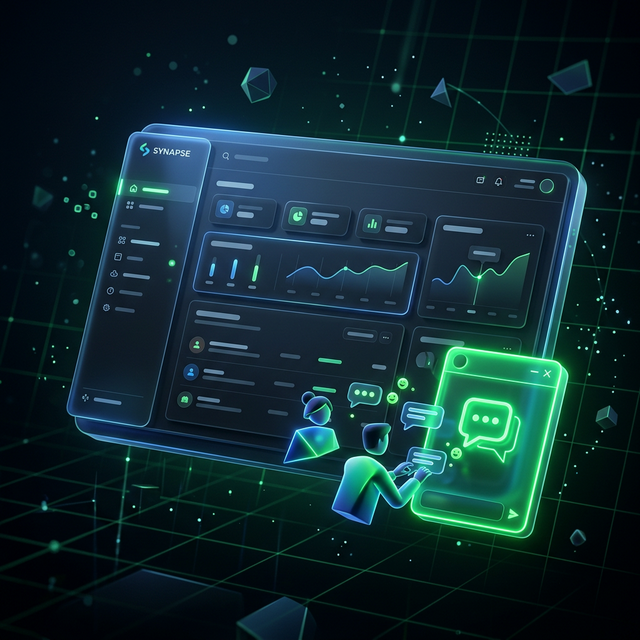
A good AI website chatbot changes that—not by spamming visitors, but by starting the right conversation at the right moment, then guiding the visitor toward a clear next step.
The Real Problem: Visitors Don’t Want to Work for You
Traditional “Contact Us” forms assume visitors will:
- decide they trust you,
- open a form,
- type details,
- explain their needs,
- and press submit.
That’s a lot of effort. Most visitors won’t do it—especially on mobile.
In Qatar, many visitors prefer quick interactions:
- one question,
- one answer,
- then a simple action (WhatsApp, call, booking request).
A website chatbot meets people where they already are: on the page, right now.
What an AI Website Chatbot Actually Does
A modern AI website chatbot is not the old “scripted bot” that fails when you change a sentence.
A proper AI chatbot:
- understands natural language questions,
- answers from approved FAQs (so it stays accurate),
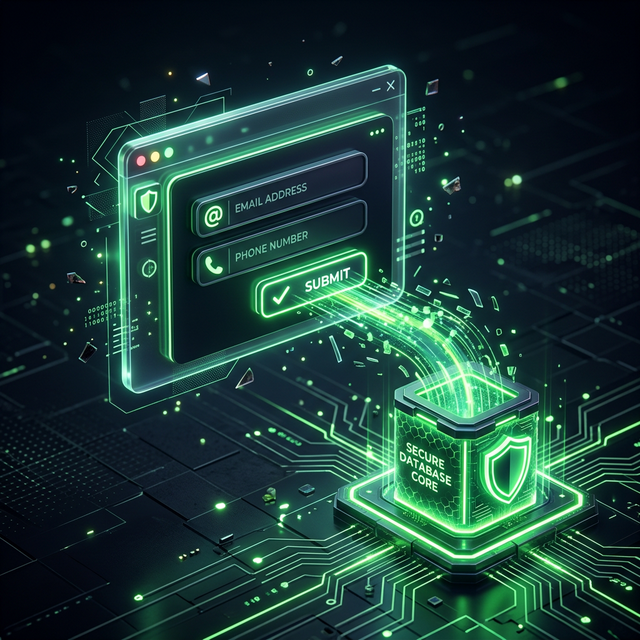
- captures leads (email + phone),
- qualifies the visitor’s needs,
- and routes the conversation to a human when necessary.
It’s like having a smart receptionist on your website—24/7.
How Chatbots Convert Without Being Annoying
The biggest mistake companies make is forcing a chatbot to pop up aggressively. You don’t need that.
A better approach is context-based help:
- Visitor is on a “pricing” section → chatbot offers to explain packages.
- Visitor is on a service page → chatbot offers a short “what’s included”.
- Visitor is reading a case study → chatbot asks if they want similar results.
- Visitor is on the contact page → chatbot offers to book directly.
This is how you increase conversions without annoying people.
Example prompts that feel natural:
- “Want a quick recommendation based on your business type?”
- “If you tell me your industry, I’ll suggest the best solution.”
- “Would you like to book a free consultation?”
Short, polite, and relevant.
Lead Capture: The Difference Between Chat and Revenue
A chat conversation is useful, but a captured lead is what turns into revenue.
A strong lead-capture chatbot does two things well:
1) Collects contact details at the right time
Not immediately. Not too late. A good flow:
1. Answer the first question
2. Then ask for email + Qatar phone number to continue / confirm / send details / book
2) Keeps the visitor moving forward
Every conversation should have a next step:
- “Book consultation”
- “Request on-site assessment”
- “Talk to a human”
- “Share your preferred time”
This turns browsing into action.
Real-Time Qualification (Why Chatbots Beat Contact Forms)
Forms treat every visitor the same. Chatbots don’t have to. A chatbot can qualify leads by asking a few quick questions:
- “What type of business do you run?” (restaurant, salon, gold shop, services, etc.)
- “What’s your main goal?” (more leads, faster support, automation, cost reduction)
- “When do you want to launch?” (this week, this month, later)
- “Preferred contact method?” (WhatsApp / call / email)
Then the system can route the right action:
- “Talk to human now” for hot leads
- “Book consultation” for ready-to-buy
- “Share FAQs / brochure” for warm leads
This doesn’t feel like a sales interrogation if you keep it short and helpful.

What Makes a Good AI Website Chatbot (Especially in Qatar)
Not all chatbots are equal. Here’s what matters in Qatar SME reality:
1) Bilingual capability (English + Arabic)
Qatar audiences often mix language. Even if the website is English, inquiries can come in Arabic.
2) Grounded knowledge (FAQ-based answers)
The bot should answer from your approved service FAQs, not “freestyle.” If something isn’t in the knowledge base, it should:
- ask a clarifying question, or
- route to a human.
3) Lead capture that fits local behavior
Many Qatar customers prefer WhatsApp first. Your chatbot should offer:
- WhatsApp handoff
- call request
- contact form link
4) Human escalation
A chatbot should never block a real human conversation. If a visitor says:
- “real human”
- “call me”
- “I want a meeting”
the bot should immediately provide the best direct path (WhatsApp/contact form).
5) Analytics (simple, not complicated)
You want to see:
- number of conversations
- number of leads captured
- top questions
- common objections (pricing, timing, trust)
- escalation rate
Those insights improve both your marketing and your sales script.

Where Qatar SMEs Win the Most With a Website Chatbot
Here are common wins by industry:
Restaurants, coffee shops, cafes
- instant menu questions
- bookings and event reservations
- delivery and location questions
Salons and clinics
- price inquiries and service details
- booking requests
- “availability today” questions
Car rental and service businesses
- availability, pricing, documents needed
- booking requests
- delivery/pickup questions
Professional services
- qualification and scope questions
- meeting requests
- collecting details before a human call
A Practical Implementation Plan (What You Can Launch First)
A clean rollout usually looks like this:
Step 1: Add chatbot to key pages first
Start with pages where intent is high: service pages, pricing section (if you have it), contact page, landing pages used for ads.
Step 2: Build the FAQ knowledge base
Use your real FAQs—not generic content. Make sure answers are consistent with your service offering.
Step 3: Add lead capture
Minimum: email, Qatar phone number, service interest.
Step 4: Set escalation rules
Examples:
- “pricing negotiation” → human
- “complaint / refund” → human
- “complex technical question” → human
Step 5: Monitor and improve weekly
Use common questions to improve FAQs and your page copy.
A Quick Note About “Remembering Visitors”
Some chatbots can continue a conversation if someone returns later, but this must be done responsibly:
- keep it simple (session-based)
- avoid storing sensitive details
- be clear about privacy and consent
What to Expect (Realistic Outcomes)
A well-set AI chatbot typically improves:
- response speed (instant)
- lead capture rate vs forms
- qualification quality (better sales calls)
- overall trust and engagement
The biggest benefit is not “AI magic.” It’s consistency + speed + clear routing.
Next Step: Turn Your Website Into a Lead Funnel
If your website is getting traffic but not generating leads, start here:
- implement an AI website chatbot with approved FAQs
- add lead capture (email + Qatar phone)
- route visitors to consultation or WhatsApp
Want MeandRobo to set it up?
If you want a chatbot that:
- answers from your service FAQs,
- captures leads cleanly,
- and routes to a real human when needed,
you can book a free consultation with MeandRobo.
FAQ (helps Google + AI answers)
What’s the difference between a website chatbot and a WhatsApp agent?
A website chatbot engages visitors on your site and captures leads while they browse. A WhatsApp agent continues support on WhatsApp and handles ongoing inquiries.
Will the chatbot annoy visitors?
Not if it’s deployed with contextual triggers and polite messaging. It should help, not interrupt.
Can the chatbot qualify leads?
Yes. It can ask short questions (industry, goal, timeline) and route high-intent leads to a human or booking.
Can it support Arabic?
Yes, bilingual support is important in Qatar and should be part of the chatbot design.
Ready to automate your customer support?
Let’s discuss how MeandRobo can deploy a custom AI customer agent for your Qatar SME, saving you hours every day.